
How to Repair Glass Furnace Crown Sagging Without Shutdown
A Systematic Solution Based on High Performance Fused Cast Refractories and LowTemperature Welding Repair
Glass furnaces are the core equipment of glass production. Their operational stability directly affects production efficiency and product quality. As the primary barrier against high-temperature corrosion and the main load-bearing medium of the furnace structure, refractory materials play a decisive role in determining furnace service life and operational safety.
The furnace crown, as the top load-bearing structure of a glass furnace, operates for long periods under temperatures exceeding 1500 °C while simultaneously supporting the combined loads of its own weight, insulation layers, and steel structures. As a result, it is highly susceptible to deformation and sagging caused by performance degradation of refractory materials.
If timely and scientific repair measures are not implemented, crown sagging may lead to severe safety accidents such as cracking or collapse, and even unplanned furnace shutdowns, resulting in substantial economic losses. Therefore, establishing an efficient crown sagging repair system based on optimized refractory performance and rational application is of great practical significance for stable glass production.
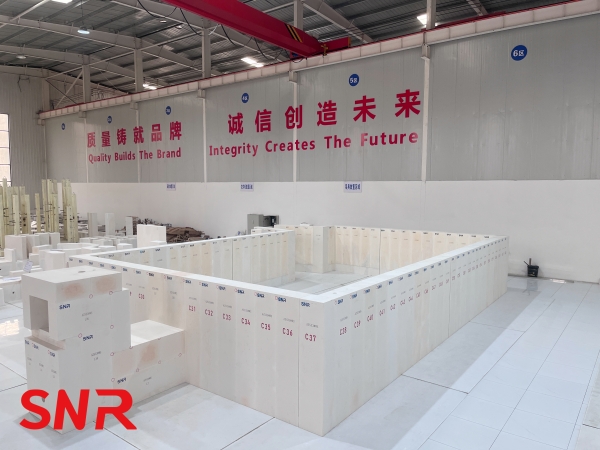
I. Core Causes of Crown Sagging: Analysis of Refractory Performance Deficiencies
Crown sagging in glass furnaces is not caused by a single factor, but its root causes consistently relate to refractory material performance. Based on industry practice, three key issues are commonly observed:
1. Insufficient Refractoriness Under Load
Some refractory bricks used in furnace crowns have load softening temperatures that fail to meet the requirements of long-term high-temperature service. Under continuous exposure to temperatures above 1500 °C, internal crystal structures undergo changes, resulting in a significant reduction in strength. Consequently, the material becomes unable to effectively support the upper load, leading to compressive deformation and sagging.
2. Poor Thermal Shock Resistance
During furnace operation, temperature fluctuations frequently occur in the crown area due to heating, cooling, and production load adjustments. If refractory materials exhibit high thermal expansion coefficients and insufficient thermal shock resistance, thermal stresses easily develop during temperature changes. This can cause cracking and spalling of bricks, compromising the overall structural stability of the crown and indirectly triggering sagging.
3. Weak Corrosion Resistance
Volatile species from molten glass and combustion by-products inside the furnace continuously attack crown refractories. Long-term corrosion leads to progressive surface loss and structural loosening, reducing mechanical strength and load-bearing capacity, thereby creating latent risks for crown sagging. In addition, deformation or burnout of steel structures can disrupt load balance, accelerating refractory failure and sagging.
These issues are present to varying degrees in float glass furnaces, horseshoe-flame furnaces, and other furnace types, constituting a common challenge to long-term stable operation. Addressing these problems fundamentally depends on the selection of high-performance refractories combined with scientific repair technologies.
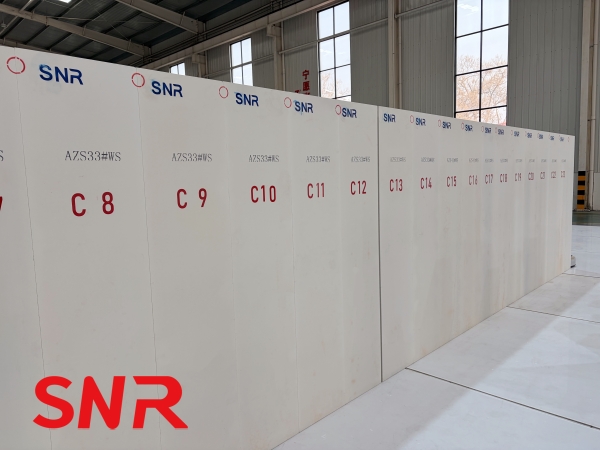
II. Limitations of Traditional Repair Methods
When dealing with crown sagging, traditional repair methods often fail to achieve satisfactory results due to limitations in refractory application. Two major constraints are evident:
1. Conventional Brick Replacement Requires Complete Furnace Shutdown
This method involves removing damaged crown refractories and rebuilding with new bricks. However, furnace shutdown directly interrupts production, causing significant downtime losses. Moreover, during reheating, uneven temperature distribution throughout the furnace can introduce secondary thermal stresses into newly installed refractories, compromising post-repair structural stability. If the new refractories are not well matched to the original crown materials, the risk of renewed sagging within a short period remains high.
2. High-Temperature Ceramic Welding Has Adaptability Limitations
High-temperature ceramic welding enables online repair without furnace shutdown, but it imposes strict temperature requirements. Typically, the welding zone must be maintained at no less than 650 °C. In sagging crown areas, however, structural damage and heat loss often lead to uneven temperature distribution, with some regions only reaching 300–400 °C. Under such conditions, conventional welding materials cannot fully react or sinter, resulting in insufficient bonding strength with the original refractories. Consequently, the repaired material may detach, making it difficult to form long-term structural support.
III. Core Breakthrough: Selection and Application System of High-Performance Refractories
To overcome the limitations of traditional repairs, the industry has developed a repair system centered on high-performance fused cast AZS blocks, complemented by specialized welding materials. This system provides reliable material-level support for crown sagging repair.
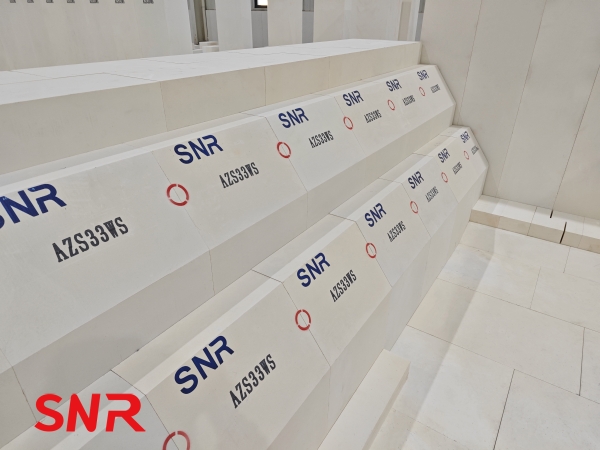
1. Primary Load-Bearing Material: Advantages and Suitability of Fused cast AZS blocks
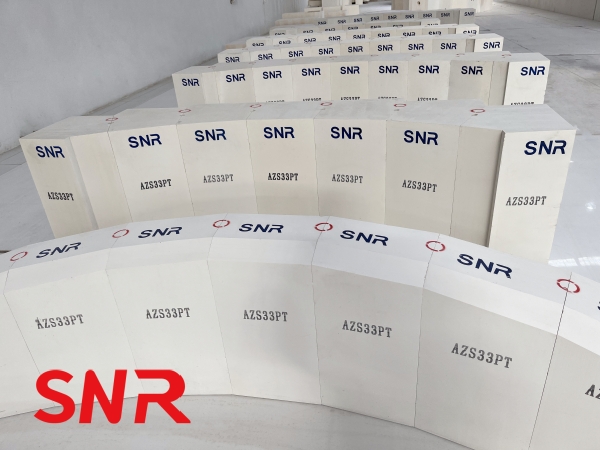
Fused cast AZS blocks, with their exceptional high-temperature performance, serve as the core load-bearing material for crown sagging repair. Manufactured through a full electric fusion process—typically with melting temperatures exceeding 2000 °C—and precisely controlled cooling rates, these bricks develop a dense and uniform microstructure that confers multiple advantages well suited to crown operating conditions:
High-Temperature Stability:
The refractoriness under load of fused cast AZS blocks far exceeds the operating temperature of furnace crowns. Even under extreme conditions above 1600 °C, they maintain stable crystal structures and mechanical properties, effectively supporting upper loads and preventing deformation due to high-temperature strength loss.
.png)
Thermal Shock Resistance:
Through optimized chemical composition and manufacturing processes, the thermal expansion coefficient of fused cast AZS blocks is precisely controlled at a relatively low level, enabling effective mitigation of thermal stresses caused by temperature fluctuations. Tests show that the bricks remain crack-free after multiple water-quenching cycles at 1100 °C, making them highly suitable for crown zones with frequent temperature changes.
Corrosion Resistance:
The dense microstructure effectively blocks penetration and corrosion by glass vapors and corrosive gases, reducing material loss and extending the post-repair service life of the crown. Additionally, their cold crushing strength exceeds 35 MPa, significantly outperforming conventional refractory bricks and providing robust mechanical support.
2. Matching Bonding Material: Technological Upgrading of Low-Temperature Ceramic Welding Materials
To address insufficient temperatures in sagging crown areas, low-temperature ceramic welding materials have undergone critical technological improvements, focusing on low-temperature adaptability and strong bonding:
Formulation Design:
A three-level particle grading system—coarse aggregate framework, fine powder filling, and ultrafine powder bonding—is adopted to ensure dense packing even under medium- to low-temperature conditions, thereby improving repaired body strength. New functional components are introduced to significantly reduce the ignition temperature of the reaction while maintaining high-temperature resistance and corrosion resistance, enabling full sintering and bonding at temperatures as low as 300–400 °C.
Performance Compatibility:
The chemical composition and thermal expansion coefficient of the welding material are highly compatible with fused cast AZS blocks. After welding, a strong metallurgical bond forms between the materials, with bonding strength exceeding 5 MPa. This effectively prevents interface cracking caused by thermal expansion mismatch and ensures an integrated load-bearing structure with the original crown.
IV. Scientific Construction Process: Maximizing Refractory Performance
The effectiveness of high-performance refractories depends on standardized and scientific construction procedures. A mature four-step method—pre-treatment, installation, welding repair, and reinforcement—is widely adopted to fully exploit material performance:
1. Precise Pre-Construction Preparation
Preparation focuses on three aspects:
Material Customization and Inspection:Fused cast AZS blocks are customized according to the dimensions, curvature, and load requirements of the sagging area to ensure perfect conformity with the crown geometry. Sampling inspections verify that both bricks and welding materials meet technical specifications.
Equipment Calibration:Specialized welding equipment, infrared thermometers, and leveling instruments are prepared. Parameters such as material feed rate and oxygen flow are precisely adjusted.
On-Site Pre-Treatment:Dust, damaged refractories, and corrosion products are removed from the sagging area to expose a sound substrate, which is leveled using specialized tools. High-strength load-bearing steel structures are prefabricated based on structural calculations to accommodate composite loads.
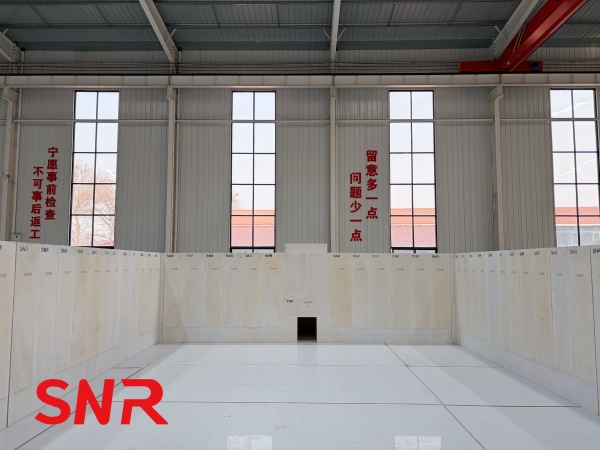
2. Core Construction Operations
Fused cast AZS block Installation:Bricks are positioned according to precise layout lines, tightly fitted to the sagging surface. Uniform gaps of 2–3 mm are reserved between bricks for welding material filling. Levels are used to ensure uniform load distribution and prevent stress concentration. Temporary high-temperature supports are installed to prevent displacement.
Preheating and Welding Repair:The repair area is preheated to approximately 350 °C, the optimal range for low-temperature welding. Welding material is then applied to fill joints between bricks and between bricks and the crown. Welding speed and material quantity are carefully controlled to ensure dense, bubble-free filling, while infrared thermometers continuously monitor temperature stability.
Suspension and Reinforcement:After welding, holes are drilled at preset positions in the fused cast AZS blocks, and high-temperature expansion bolts are installed. High-strength heat-resistant steel bars are welded to connect the bricks with the prefabricated upper steel structure, forming an integrated load-transfer system:
upper steel structure → steel bars → fused cast AZS blocks → welded body → original crown,
effectively transferring loads and preventing further sagging.
After completion, the repaired area undergoes insulation curing for more than two hours, allowing slow cooling to ambient temperature to avoid thermal cracking and ensure long-term stability.
V. Technical Value of High-Performance Refractory Application
The fused cast AZS block–centered refractory system, combined with scientific repair techniques, provides an efficient solution for crown sagging, offering significant technical value in three aspects:
Production Assurance:
Online repair without furnace shutdown minimizes production interruption and economic loss. The repaired crown exhibits high structural stability, effectively preventing safety incidents and ensuring continuous and safe operation.
Economic Benefits:
High durability and corrosion resistance extend crown service life by 3–5 years, significantly reducing maintenance frequency and replacement costs. Superior high-temperature performance also reduces heat loss, indirectly improving energy efficiency and lowering operating costs.
Applicability:
The solution can be customized for various furnace types, including float and horseshoe-flame furnaces, by adjusting brick specifications and construction parameters, offering broad application potential across the glass industry.
VI. Prevention First: Crown Subsidence Control Strategies Based on Refractory Material Application
Compared to post-construction maintenance, proactive prevention of crown subsidence through scientific application and management of refractory materials can reduce furnace operation and maintenance costs and ensure stable production. Based on industry practice, the core control strategy revolves around the full life-cycle management of refractory materials:
Source Selection and Control: During furnace construction or crown modification, refractory materials must be precisely selected based on the furnace type, operating temperature, load intensity, and corrosiveness of the medium. For the core load-bearing areas of the crown, fused cast AZS blocks with high load softening temperature and strong thermal shock resistance should be prioritized to avoid potential hazards due to insufficient material performance redundancy or poor compatibility; auxiliary areas can be equipped with high-quality clay bricks or high-alumina bricks with matching performance to achieve a balance between cost and performance.
Enhanced Quality Acceptance: Upon arrival of refractory materials, rigorous verification of product certificates and performance test reports is required. Key indicators such as load softening temperature, room temperature compressive strength, and thermal shock resistance must be strictly verified to prevent the use of substandard products. Simultaneously, the appearance of the bricks must be inspected to ensure the absence of cracks, missing corners, and excessive dimensional deviations, preventing any impact on the overall sealing and load-bearing capacity of the crown structure.
Routine Maintenance and Monitoring: During production, the temperature distribution and structural integrity of the crown refractory materials are regularly monitored using infrared thermometers and ultrasonic detectors to promptly detect abnormalities such as localized overheating and brick cracking. Accumulated ash, nodules, and corrosion products on the crown surface are regularly cleaned to reduce long-term erosion of the refractory materials by corrosive media. Frequent furnace start-ups and shutdowns or significant temperature fluctuations should be avoided to reduce thermal stress damage to the refractory materials.
.jpg)
Regular Replacement and Upgrade: A reasonable replacement plan should be developed based on the service life and actual wear and tear of the refractory materials. For vulnerable parts such as the edges of the crown and areas of concentrated stress, local replacement or reinforcement can be carried out in advance to avoid overall subsidence caused by single-point failure. At the same time, attention should be paid to the development of refractory material technology, and new fused cast AZS blocks or composite materials with better performance should be used in a timely manner to upgrade and improve the long-term stability of the crown structure.
Looking ahead, continued advances in refractory formulations and manufacturing processes will further enhance fused cast AZS block performance. Combined with intelligent construction equipment, crown sagging repair is expected to become increasingly precise and efficient, providing stronger technical support for the high-quality development of the glass industry.
Henan SNR Refractory Co., Ltd (SNR) focuses on producing high quality refractory materials.If you have any needs, please contact me.