
The glass furnace, as the core equipment in glass production, directly impacts the economic efficiency and market competitiveness of glass manufacturing enterprises through its operational efficiency and energy consumption levels. During the glass melting process, the furnace must maintain a high-temperature environment for extended periods to melt the batch materials into molten glass. However, the furnace's large heat dissipation area leads to significant heat loss, which not only increases energy consumption but also reduces the furnace's thermal efficiency and raises production costs.
The tank bottom and sidewalls are critical structural parts of the glass furnace, directly contacting the high-temperature molten glass and enduring intense chemical corrosion and mechanical erosion (or washing) by the molten glass. Simultaneously, they are also one of the primary areas for heat loss. Therefore, effective insulation treatment for the furnace tank bottom and sidewalls can not only reduce heat loss and lower energy consumption but also enhance the furnace's service life and the quality of the molten glass. This holds significant importance for the sustainable development of glass manufacturing enterprises.
1208(1).jpg)
1. Importance of Insulating Glass Furnace Tank Bottom and Sidewalls
The glass furnace, serving as the core and heart of the glass industry, accounts for a significant portion of the overall production costs in terms of energy consumption. Among the various designs for energy saving and longevity in furnaces, insulating the tank bottom and sidewalls is by no means an optional step, but rather a critical engineering measure concerning safety, efficiency, quality, cost, and environmental responsibility. Its importance is specifically reflected in the following core aspects:
1.1 Ultimate Energy Efficiency and Significant Operational Cost Savings
This is the most direct and prominent economic benefit of insulation. Glass melting requires heating batch materials to temperatures exceeding 1500°C for melting and homogenization, an extremely energy-intensive process. In an inadequately insulated furnace, immense amounts of heat are continuously lost to the surrounding environment through the sidewalls and tank bottom (especially the deeper sections) via heat radiation and conduction. This is equivalent to directly "burning" valuable fuel (such as natural gas) or wasting electricity by releasing heat into the atmosphere.
Effective insulation creates a powerful thermal barrier by installing high-performance insulation layers on the outer surfaces of the refractory materials, drastically reducing heat loss, typically lowering surface temperatures by several hundred degrees Celsius. This means that significantly less fuel input is required to maintain the same melting temperature. In today's climate of volatile global energy prices, this translates directly into substantial cost savings, enhancing the factory's price competitiveness in the global market.
1.2 Superior Glass Quality and Stable Production Process
The impact of insulation on product quality is profound. A stable and uniform temperature field within the furnace is a prerequisite for producing high-quality glass.
Temperature Uniformity: Good insulation ensures minimal temperature gradients from the center of the furnace to areas near the sidewalls. This prevents the formation of overly cold "stagnant zones" near the walls, thereby avoiding glass crystallization or defect formation due to viscosity variations in those areas. Uniform temperatures promote beneficial convection within the molten glass, aiding in the removal of bubbles and homogenization of chemical composition.
Stable Flow Patterns: Insulation determines the convection patterns of the molten glass within the melting tank. A furnace with well-designed insulation exhibits stable and controllable flow patterns, ensuring consistent thermal and chemical history for the glass throughout the process from batching to forming. For producing high-end float glass, electronic glass, optical glass, or container glass, this stability is key to guaranteeing product optical properties, thickness uniformity, and mechanical strength.
1.3 Extending Furnace Life and Protecting Critical Assets
The furnace is one of the most expensive assets in a glass plant, and its service life directly relates to the return on investment. Insulation plays the role of a "guardian" here.
Reducing Refractory Working Stress: The sidewall and tank bottom refractory blocks are in direct contact with the high-temperature, erosive molten glass. Without insulation, the immense temperature difference between the inner and outer surfaces of the blocks creates significant thermal stress, accelerating material cracking and spalling. The insulation layer reduces the overall temperature gradient across the brick by lowering the temperature of the outer surface, thereby significantly reducing internal thermal stress.
1208.jpg)
.png)
Formation of a Protective Frozen Layer: A carefully designed insulation system does not blindly pursue the highest temperatures but controls heat loss to allow the glass in contact with the sidewall refractory bricks to cool and solidify, forming a thin, hard "frozen layer." This layer of frozen glass acts as a permanent, self-regenerating lining, effectively isolating the flowing molten glass from chemical erosion and mechanical flushing of the refractory blocks. This is one of the core technologies enabling the extension of furnace campaigns to 8 years, 12 years, or even longer.
1.4 Enhancing Operational Safety and Improving Working Environment
Reduced Surface Temperature: Uninsulated furnace sidewalls and shells can reach temperatures of several hundred degrees Celsius, posing a serious burn risk to onsite personnel. Effective insulation can reduce external surface temperatures to safe levels (typically below ambient temperature +60°C or lower), greatly improving safety in the work area.
Improved Workshop Environment: Significant heat dissipation can make the entire workshop, especially the furnace area, extremely hot. This not only affects workers' health, increasing the risk of heatstroke, but also causes equipment (such as motors, control systems) to malfunction frequently due to high ambient temperatures. Insulation measures can significantly reduce ambient temperatures, creating a more comfortable, safer, and more efficient workspace.
1.5 Fulfilling Environmental Responsibility and Reducing Carbon Footprint
Against the backdrop of global efforts to address climate change, the pressure for energy saving and emission reduction in the glass industry is increasing.
Direct Emission Reduction: Reduced fuel consumption directly translates to lower emissions of greenhouse gases like carbon dioxide (CO₂) and pollutants like nitrogen oxides (NOx).
Indirect Contribution: Extending furnace life means reducing the massive amount of refractory waste generated during cold repairs, shutdowns, demolition, and reconstruction, as well as the energy consumed and emissions produced during the rebuilding process. This aligns with the global principles of the circular economy and sustainable development.
2. Common Insulation Materials and Their Characteristics
2.1 Fused Cast AZS Blocks(Refractory Lining)
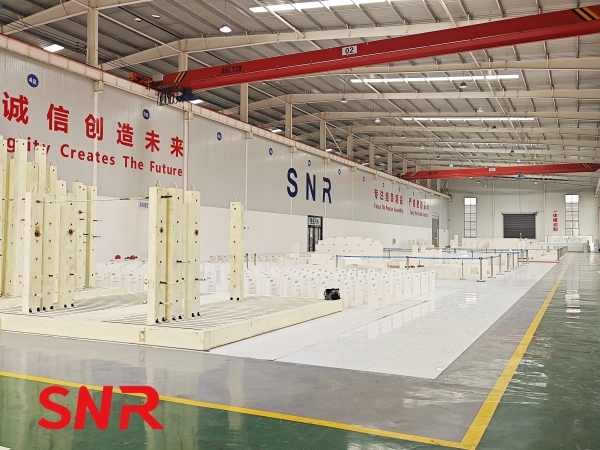
Fused cast AZS blocks are an important type of refractory insulation material. Their manufacturing process involves melting selected zircon sand and industrial alumina powder in specific proportions, with small amounts of fluxes added, followed by mixing, high-temperature melting, casting, and forming. Fused cast AZS blocks are characterized by dense structure, low porosity, high bulk density, high mechanical strength and high-temperature structural strength, and strong resistance to molten glass erosion.
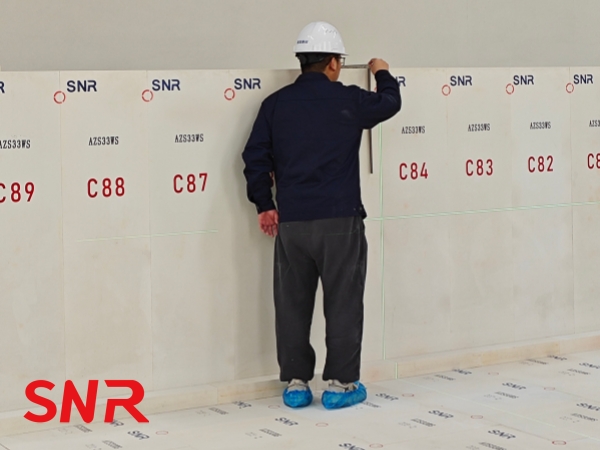
In glass melting furnaces, commonly used fused cast AZS blocks include fused cast AZS (Alumina-Zirconia-Silica) blocks and fused cast alumina blocks. Fused cast AZS blocks are classified into different grades based on ZrO₂ content, such as AZS-33, AZS-36, and AZS-41. Fused cast AZS blocks with 33% and 36% ZrO₂ are used for constructing furnace sidewalls, superstructure breastwalls, burner port areas, etc. Fused cast AZS blocks with 41% zirconia content are used for constructing sidewall corners, throat areas, and other locations subject to the most severe erosion from molten glass. Fused cast alumina bricks, made from high-purity alumina raw materials, are suitable for the upper structure of the working end and for areas like burner ports in the rear part of the melting zone and their adjacent breastwalls and burner arches.
2.2 Lightweight Clay Insulation Bricks
Lightweight clay insulating bricks are a common type of thermal insulation material, primarily composed of clay. They feature low density, high porosity, and excellent thermal insulation performance. Their density does not exceed 1.3 g/cm³. Due to the poor heat transfer properties of air, lightweight clay insulation bricks provide excellent thermal insulation, with thermal conductivity coefficients 2-3 times lower than general refractory materials. The higher the porosity, the better the insulation effect. In insulating glass furnace tank bottoms and sidewalls, lightweight clay insulation bricks are often used to build the insulation layer, effectively reducing heat loss.
2.3 Fireclay Bricks
Fireclay Bricks are traditional refractory materials possessing considerable structural strength and moderate insulation properties. Their main component is clay, fired at high temperatures. Compared to lightweight clay insulation bricks, they have higher density and strength, but also relatively higher thermal conductivity. In glass furnace insulation, they are often used as the load-bearing layer or in composite use with lightweight insulation bricks, providing auxiliary insulation while ensuring structural stability.
2.4 Ceramic Fiber Boards
Ceramic fiber boards possess good thermal insulation properties, high-temperature resistance, and chemical stability, capable of withstanding high temperatures without deformation or damage. In glass furnace tank bottom insulation, ceramic fiber boards can be used for base layer installation, adding structural strength while providing excellent thermal insulation. Additionally, ceramic fiber boards have a degree of flexibility, allowing them to adapt to uneven surfaces of the furnace tank bottom, ensuring the integrity of the insulation layer.
3. Construction Technology for Insulating Glass Furnace Tank Bottom and Sidewalls
3.1 Construction of Tank Bottom Insulation
Base Preparation: Before constructing the tank bottom insulation, the furnace foundation must be cleaned, ensuring the surface is level, free of oil stains, and debris. Any uneven areas on the tank bottom should be repaired and leveled to guarantee the quality of the insulation layer installation.
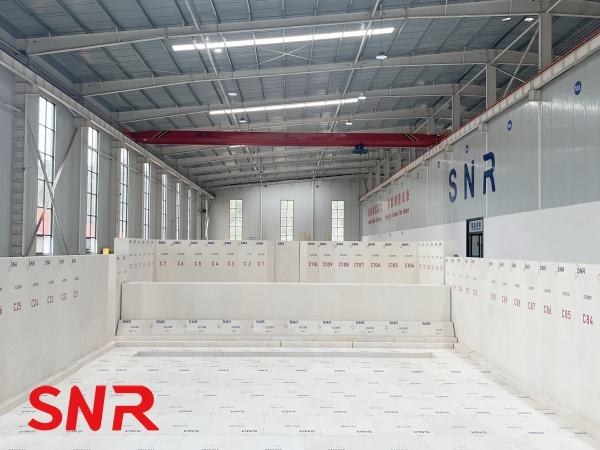
Insulation Layer Installation: The insulation layer is typically constructed outside the heavy-duty refractory brickwork or dense monolithic refractory lining. First, an 8mm thick steel plate is laid at the lowest layer to increase strength. A 10mm thick dense ceramic fiber board is laid on the steel plate to enhance thermal insulation. Then, insulation materials such as lightweight clay insulation bricks are laid on the ceramic fiber board. The insulation materials should be laid flat with tight brick joints to avoid gaps.
Anti-floating and Leakage Prevention Measures: To prevent brick floating or material leakage, careful attention is required during construction and heating. Measures such as laying cover tiles or installing anchor bricks can be taken. Laying cover tiles involves placing a layer of covering bricks over the insulation layer to increase the stability of contact with the molten glass; setting anchor bricks involves installing support stubs in the tank bottom to prevent the insulation layer from shifting due to molten glass flow.
3.2 Construction of Sidewall Insulation
Sidewall Block Treatment: The contact surfaces of sidewall blocks should be ground to ensure minimal gaps between bricks, reducing the penetration of molten glass.
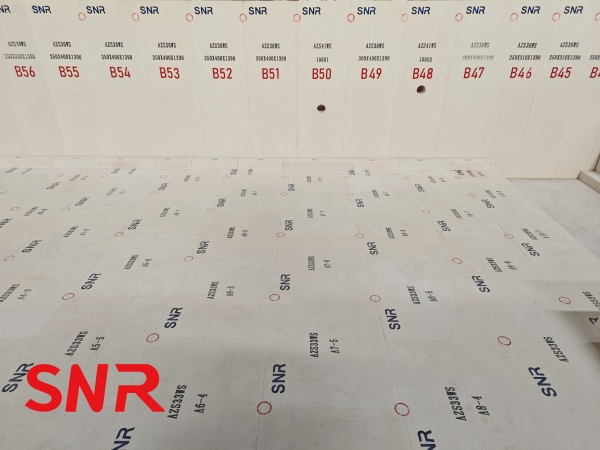
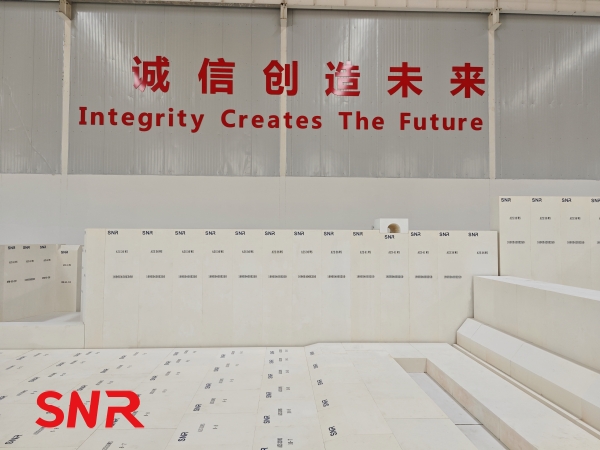
Insulation Material Selection and Construction: Lightweight clay insulation bricks are generally selected for sidewall insulation. During construction, it is crucial to avoid insulating the area 200mm to 300mm below the glass line. Instead, enhanced cooling (e.g., with air or water) must be applied to this specific zone. The purpose is to utilize forced cooling to form a stable protective layer of "frozen glass" in this area, thereby maximizing the slowing down of erosion of the sidewall blocks by the molten glass. This is a core technical measure for extending sidewall life. Special attention must be paid to the insulation quality at areas most susceptible to erosion and damage, such as sloped glass line areas and brick joints. When insulating, a gap of 70-80mm should be left clear of the brick joints. For melting dark-colored glass (which has higher heat absorption), it is often acceptable not to leave the joint gap clear, at least for the lower sidewall sections; in this case, it is best to fill the brick joints with alumina mortar to seal them tightly and prevent molten glass seepage.
Treatment of Special Areas: The corners of the sidewall are areas of stress concentration and are also areas where molten glass erosion and corrosion are most severe. During insulation construction, the corners should not be laid with staggered masonry. Unless otherwise specified in the design, the corners should be laid with straight joints parallel to the sidewall to improve the corner's strength and stability.
4. Quality Requirements for Insulating Glass Furnace Tank Bottom and Sidewalls
4.1 Material Quality Requirements
The quality of insulation materials directly affects the insulation effect and the service life of the furnace. Therefore, the selected insulation materials should meet the design requirements and relevant standards, and have qualified quality certification documents. Strict inspection must be carried out upon arrival of the materials to check whether their specifications, dimensions, density, refractoriness, porosity, and other indicators meet the requirements. Any unqualified materials must not be used.
4.2 Construction Process Requirements
Construction Quality: The construction of the insulation layer must strictly follow design requirements and construction specifications. Brick joints should be uniform and tight, avoiding blind joints or continuous vertical joints. In dry-laid sections, bricks should fit closely against each other without fillers; in wet-laid sections, joint widths should be controlled within specified limits and filled with refractory mortar compatible with the masonry.
Expansion Joint Treatment: During the insulation construction process, expansion joints should be reasonably reserved according to the thermal expansion coefficient of the materials. The width and location of the expansion joints should meet the design requirements, and the filling material should be ceramic fiber felt or compressible refractory material to ensure that the insulation layer will not crack due to thermal expansion and contraction, thus affecting the insulation effect.
Sealing Treatment: The connections between the insulation layer and other parts of the furnace structure must be properly sealed to prevent flame penetration, gas leakage, etc. When insulating the crown, the sealing layer must be constructed first, ensuring no gaps exist in the crown, before proceeding with the insulation layer construction.
4.3 Appearance Quality Requirements
After the insulation construction is completed, the insulation layer should have a smooth and even appearance, without obvious unevenness or cracks. The color of the insulation material should be uniform, without discoloration or peeling. At the same time, the construction site should be cleaned up, and the area around the kiln should be kept tidy.
5. Conclusion
The construction technology and requirements for insulating the tank bottom and sidewalls of glass furnaces are of great significance for the efficient operation, energy saving, and consumption reduction of glass furnaces. Through rational selection of insulation materials and scientific construction techniques, heat loss from the furnace can be effectively reduced, energy consumption lowered, and the furnace's service life and molten glass quality improved. In practical construction, relevant quality requirements must be strictly followed to ensure the quality of the insulation work.
Among these, high-performance materials like fused cast AZS blocks play an irreplaceable role in the insulation structure of key areas like the tank bottom and sidewalls due to their excellent resistance to high-temperature erosion.
Henan SNR Refractory Co., Ltd (SNR) produces a variety of high-quality fused cast AZS blocks.If you have any needs, please contact us.
 Web:www.snrefractory.com
Email:moon@snrefractory.com
