
Refractory materials are essential components in industrial furnaces, high-temperature apparatus, and thermal systems. Their properties directly influence thermal efficiency, operational reliability, energy usage, and the service lifespan of the furnace. In industries such as glass production, selecting suitable refractory materials is critical for achieving efficient, energy-saving, safe, and environmentally responsible operations.
Among the numerous refractory materials, fused cast AZS blocks, silica bricks, and corundum bricks are three representative products widely used due to their unique material characteristics and process adaptability. Fused cast AZS blocks are renowned for their extremely dense structure and exceptional erosion resistance. Silica bricks perform outstandingly in specific temperature ranges due to their excellent high-temperature resistance and thermal insulation properties. Meanwhile, corundum bricks achieve an excellent balance between high strength, high refractoriness, and good thermal shock stability. These three types of materials have significant differences in their composition systems, manufacturing processes, performance, and application scenarios, yet each holds irreplaceable advantages.
Based on the perspective of materials science and engineering applications, this paper will conduct a systematic comparative analysis of the material composition, manufacturing processes, physical properties, chemical stability, and applicable fields of fused cast AZS blocks, silica bricks, and corundum bricks. By reviewing the key performance parameters, economic performance, and behavioral characteristics of the three types of materials under actual working conditions, this study aims to provide a scientific material selection basis and usage guidance for engineering designers, furnace manufacturers, and production enterprises, thereby supporting performance optimization and technological advancement of high-temperature industrial equipment.
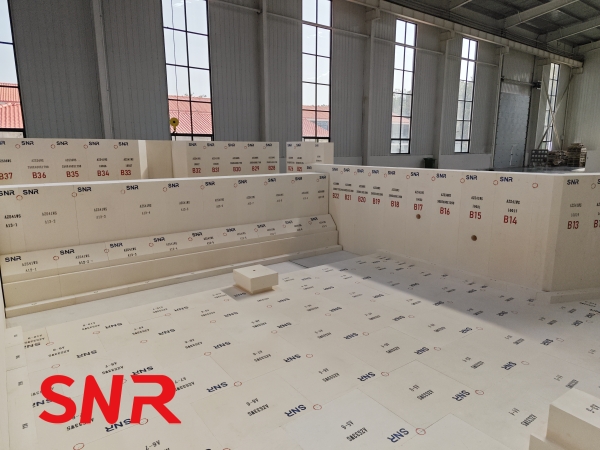
1. Material Composition and Manufacturing Process
Fused cast AZS blocks
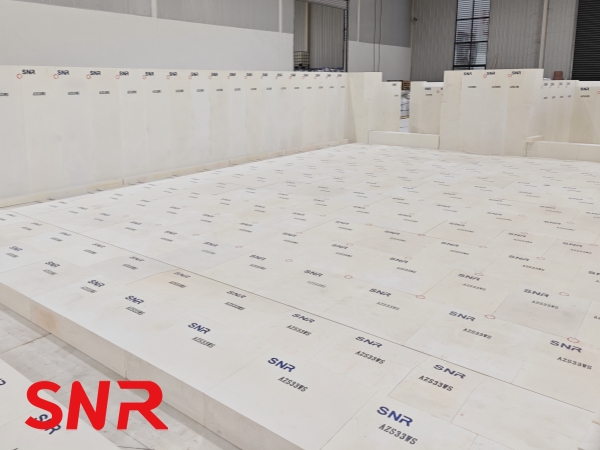
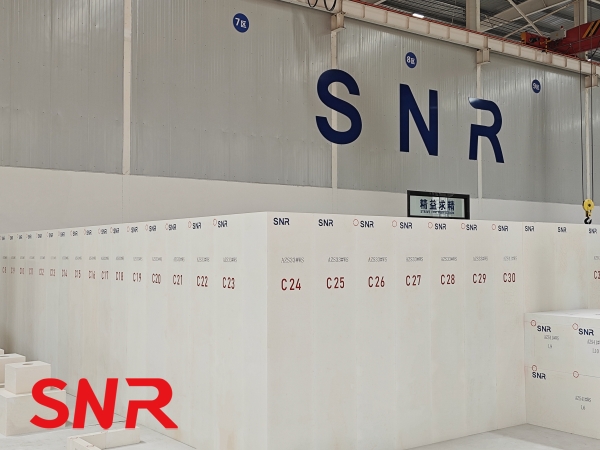
Fused cast AZS blocks primarily use zirconite and industrial alumina as main raw materials, with small additions of zircon-rich sand, soda ash, and borax. They are melted at high temperatures via the electric fusion method and then cast into shape. Products made by the electric fusion method possess the advantages of a dense structure and low porosity.
Silica Bricks
Silica bricks employ silica (or high-purity quartz sand) as their main raw input, with minor additions of mineralizers (such as Na₂O). They are fired at high temperatures, then shaped by pressing. Silica bricks display high temperature resilience, superior thermal insulation, and robust chemical stability.
Corundum Bricks
Corundum bricks consist primarily of alumina, with a content exceeding 90%. They are divided into two types: sintered corundum bricks and fused cast corundum bricks. Fused cast corundum bricks are produced by melting alumina raw materials in an electric furnace, followed by cooling and solidification. Corundum bricks exhibit high refractoriness, corrosion resistance, slag resistance, and high-temperature strength.
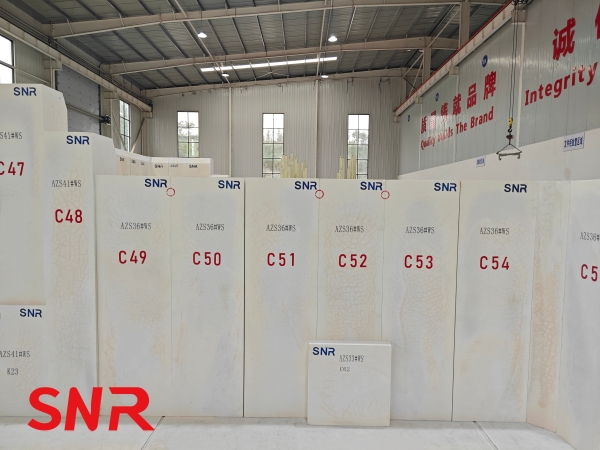
2. Physical and Chemical Properties
Fused cast AZS blocks
Advantages: Fused cast AZS blocks offer a dense structure, low porosity, high bulk density, high mechanical strength, and high structural strength at elevated temperatures. Furthermore, fused cast zirconia corundum bricks possess exceptional resistance to molten glass erosion and good electrical insulation properties.
Disadvantages:The cost is relatively high, especially for fused cast AZS blocks with high zirconia content.
Silica Bricks
Advantages:Silica bricks boast high refractoriness under load, good structural strength at high temperatures, and excellent thermal insulation properties.
Disadvantages:The price is relatively high, and under certain high-temperature, strongly reducing atmospheres, structural changes may occur, affecting their service life.
Corundum Bricks
Advantages:Corundum bricks have high cold crushing strength, high refractoriness under load (onset temperature), good chemical stability, and good thermal shock stability (for dense products).
Disadvantages:Thermal shock stability may be poor for products with inferior microstructure, and the cost is relatively high.
3. Performance Comparison and Selection Considerations
3.1 Temperature Resistance
Fused cast AZS blocks:These bricks, particularly high-zirconia fused cast zirconia corundum bricks, possess extremely high refractoriness and can withstand extreme temperatures exceeding 1700°C. This makes them highly suitable for harsh conditions like those found in glass melting furnaces.
Silica Bricks:Silica bricks also exhibit high refractoriness, though it is generally lower than that of fused cast AZS blocks, typically around 1600°C. They demonstrate good stability at high temperatures, but prolonged exposure can lead to structural changes.
Corundum Bricks:The refractoriness of corundum bricks usually falls between that of fused cast AZS blocks and silica bricks, depending on the alumina content and microstructure. High-quality corundum bricks can also endure high-temperature environments but may be less resistant to scouring compared to fused cast AZS blocks.
3.2 Corrosion Resistance
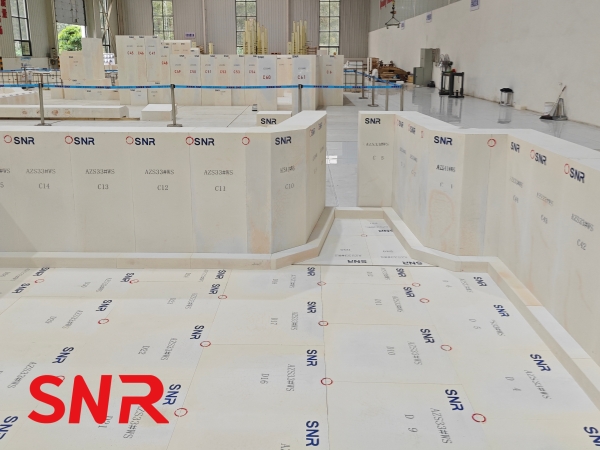
Fused cast AZS blocks:They offer excellent corrosion resistance against molten glass, molten metals, and various acidic and basic slags. The zirconia component in fused cast zirconia corundum bricks effectively resists erosion from molten glass, thereby extending service life.
.png)
Silica Bricks:These bricks provide good resistance to most acidic and alkaline substances. However, under certain strongly reducing atmospheres, silica can be reduced to volatile silicon monoxide (SiO), leading to structural disintegration and performance degradation.
Corundum Bricks:Corundum bricks exhibit good corrosion resistance against many chemicals, particularly showing strong resistance to erosion by molten metals. However, for specific slags, such as those containing high proportions of fluorides, their corrosion resistance may be inferior to that of fused cast AZS blocks.
3.3 Erosion/Scour Resistance
Fused cast AZS blocks:Due to their dense structure and low porosity, fused cast AZS blocks, especially high-zirconia types, possess excellent erosion/scour resistance. This makes them the preferred material for areas subjected to severe scouring, such as the melting tank in glass furnaces.
Silica Bricks:The erosion/scour resistance of silica bricks is relatively weak, especially at high temperatures, where their structure can be rapidly damaged by scouring.
Corundum Bricks:The erosion/scour resistance of corundum bricks is intermediate between that of fused cast and silica bricks, depending on their microstructure and alumina content. High-quality corundum bricks can withstand a certain degree of scouring but may not be as durable as fused cast AZS blocks.
3.4 Economics and Sustainability
Cost:Fused cast AZS blocks generally have a higher cost, particularly high-zirconia fused cast zirconia corundum bricks. Silica and corundum bricks are relatively lower in cost, but the specific price depends on factors like raw material quality, production process, and market demand.
Sustainability:The sustainability of all refractory materials is related to their raw material sourcing, production processes, and service life. Although fused cast AZS blocks have a high initial cost, their excellent performance and long lifespan may result in higher overall economy. Silica and corundum bricks also have potential in terms of sustainability, especially if recycled materials are used or production processes are optimized to reduce energy consumption and waste generation.
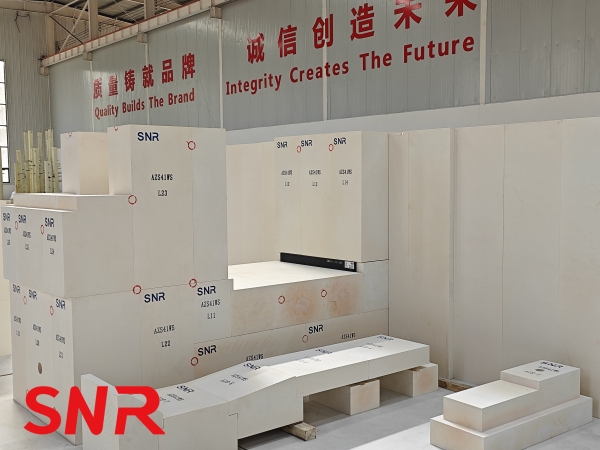
3.5 Selection Considerations
When selecting refractory materials, in addition to the performance factors mentioned above, the following aspects should also be considered:
Application Environment:Understand the specific operating conditions of the furnace or equipment, including temperature, atmosphere, and corrosive substances, to determine the required refractory performance.
Service Life:Consider the expected service life and replacement cost of the material, as well as the impact of replacement on production.
Maintenance Convenience:Choose materials that are easy to install, maintain, and replace to reduce downtime and maintenance costs.
Environmental Requirements:Consider the environmental performance and sustainability of the materials, and whether they comply with relevant regulations and standards.
Thermal Shock Stability: For furnaces with frequent temperature cycling, the material's resistance to thermal shock is critical to prevent cracking and spalling.

4. Application Scenarios
Fused cast AZS blocks
1. Melting End – The Core and Most Demanding Zone
The melting end is where the batch materials are heated and melted into molten glass, experiencing the highest temperatures (can exceed 1600°C) and the most severe chemical corrosion and mechanical erosion.
Sidewall Blocks
Location:All sidewalls in contact with molten glass in the melting tank.
Material Selection:Direct contact with high-temperature, highly corrosive molten glass and alkaline batch materials necessitates the use of fused cast zirconia corundum blocks with the strongest erosion resistance. Typically, bricks with different zirconia contents are selected based on severity, e.g., 33# (33% ZrO₂) for upper sections and 41# (41% ZrO₂) for the most severely eroded areas near the glass line.
Function:Maintain furnace structural integrity, prevent breakthrough and leakage accidents, and ensure stable melting conditions.
Bottom Blocks
Location:The bottom of the melting tank.
Material Selection:Although temperatures are slightly lower, the bottom still withstands hydrostatic pressure and chemical corrosion from the glass. A multi-layer composite structure is often used, with the top wear layer in contact with the glass employing fused cast zirconia corundum bricks or fused cast α-β alumina bricks to resist corrosion and glass flow erosion.
Function:Prevent glass leakage, ensure a flat tank bottom, and avoid dead spots affecting glass quality.
Superstructure: Breast wall and Crown (Arch)
Location:The vertical walls (breast wall) above the melting tank and the crown.
Material Selection:These areas are not in direct contact with molten glass but are exposed to the highest temperature flame space, enduring high temperatures, batch dust, and chemical attack from alkaline vapors. Fused cast β-alumina bricks or fused cast α-β alumina bricks are typically chosen due to their excellent resistance to alkaline vapors, low high-temperature creep, and ability to maintain structural stability, preventing roof sagging.
Function:Maintain furnace tightness, reduce heat loss, and resist high temperatures and atmospheric corrosion.
2. Throat – The Critical "Bottleneck" for Erosion and Scour
This channel connects the melting end to the cooling end and is one of the most severe service condition areas in the furnace.
Location:The narrow passage where molten glass flows from the melting end to the cooling end.
Material Selection:The extremely high flow rate and temperature of the glass here demand the utmost in scour/erosion resistance. The highest grade, densest fused cast zirconia corundum bricks (41#) must be used, often with special thickening or cooling measures to extend service life.
Function:Control glass flow rate and block unmelted scum and stones from the melting end from entering the cooling end. The lifespan of the bricks in this area often determines the entire furnace's cold repair cycle.
3. Cooling End and Forming Section – The "Finishing Area" Ensuring Glass Quality
After the throat, the glass enters the cooling end and subsequent forming section, where temperatures gradually decrease, but requirements for glass purity and temperature uniformity are extremely high.
Cooling End Sidewalls and Bottom
Location:All linings in contact with molten glass in the cooling end.
Material Selection:Although temperature and corrosiveness are reduced compared to the melting end, high-quality fused cast AZS blocks are still necessary to prevent defects. Fused cast α-β alumina bricks or 33# zirconia corundum bricks are typically used to avoid the risk of zircon crystallization causing stones, while ensuring sufficient corrosion resistance.
Function:Ensure the glass is not contaminated during cooling and cools uniformly.
Forehearth, Spout, and Distributor
Location:Channels guiding molten glass to the forming equipment.
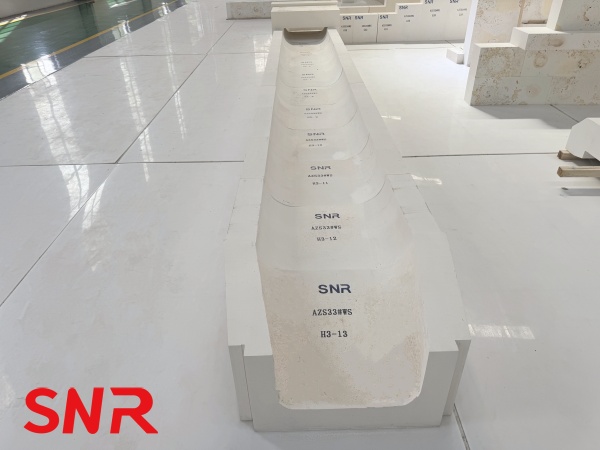
Material Selection:This is the "final step" before glass forming. Any corrosion products can directly enter the final product, causing defects like bubbles, cords, or stones. Shrinkage-free, structurally homogeneous fused cast α-alumina or β-alumina bricks must be used. These materials are extremely pure, cause minimal contamination, and ensure stable glass flow and thermal homogeneity.
Function:Precisely control the flow rate and temperature of glass entering the forming equipment, crucial for producing high-quality glass products.
Lips and Gate Blocks
Location:In the float glass process, located at the end of the spout, directly controlling the flow of glass onto the tin bath.
Material Selection:Direct contact with glass requires extremely high surface flatness, thermal stability, and corrosion resistance. High-quality fused cast α-alumina or β-alumina bricks must be used.
Function:Form a stable, uniform, and flat glass ribbon, core components for obtaining high-quality float glass base sheets.
Silica Bricks
Melting Zone
Melting Tank Walls and Crown:Silica bricks can withstand erosion and scour from high-temperature molten glass, making them an ideal choice, especially for the crown in the melting zone, due to their high-temperature stability and wear resistance. However, it is important to note that due to their relatively lower refractoriness (typically 1690-1730°C) and limited thermal shock stability, they might be unsuitable for extremely high-temperature areas with aggressive alkaline vapors like the main melting end crown apex. In such cases, superior-performing fused cast AZS blocks may be necessary.
Refining and Homogenizing Zone
Refining Tank Walls and Homogenizing Chamber:Silica bricks also play a significant role here. They maintain structural stability and integrity, preventing bubbles and impurities in the glass from adhering to the furnace walls, thus ensuring glass purity and homogeneity.
Cooling Zone
Cooling Tank Walls and Superstructure:In the cooling zone, silica bricks can withstand the heat released by the glass during cooling while maintaining structural stability. They are often the preferred choice for the superstructure of the cooling end due to their good thermal stability and wear resistance in this area.
Other Key Areas
Arch Support Blocks:While silica bricks might not be optimal for some high-temperature, high-scour areas, they can still be advantageous in less critical locations like arch support blocks, where scour and corrosion are relatively minor.
Hearth and Ducts:Silica bricks are also commonly used for constructing hearths and ducts in glass furnaces, their good thermal stability and wear resistance ensuring long-term stable operation.
Corundum Bricks
Melting Zone
Melting Tank Walls and Bottom:Corundum bricks can withstand erosion and scour from high-temperature molten glass, protecting the furnace structure. They are often used as linings for walls and bottoms in the melting zone, ensuring thorough melting and homogeneous mixing of batch materials.
Refining and Homogenizing Zone
Refining Tank Walls:During refining, corundum bricks prevent bubbles and impurities from adhering to furnace walls, ensuring glass purity. Their dense crystalline structure hinders the penetration of corrosive substances, guaranteeing glass quality.
Cooling Zone
Cooling Tank Walls and Bottom:Corundum bricks are also important here, withstanding heat release during cooling while maintaining structural stability. On float glass lines, they are used in key areas of the cooling zone to effectively block excessive heat loss and maintain the stable high-temperature environment required for glass melting.
Special Areas
Throat:Glass flow velocity is highest here, causing severe wear. Corundum bricks are commonly used for cover blocks and sidewall blocks in the weep hole to ensure smooth glass flow and reduce wear.
Crown and Breastwalls:Corundum bricks are commonly used for the cover blocks and sidewall blocks of the throat to ensure smooth glass flow and reduce wear.
Burner Block Areas:Burner blocks require resistance to high temperature, erosion, scour, and thermal shock resistance. Corundum bricks meet these requirements, performing especially well when firing high-calorific-value fuels.
Application in Composite Structures
Multi-layer Composite Bottom Structure:Furnace bottoms often use multi-layer composite structures to improve wear resistance and integrity. Corundum bricks are commonly used in the wear-resistant and protective layers of such structures to protect the rammed bottom and contact the glass directly.
Conclusion
Fused cast AZS blocks, silica bricks, and corundum bricks, as three important types of refractory materials, each possesses unique performance advantages and application scenarios. Fused cast AZS blocks, with their extremely high density, excellent corrosion, and scour resistance, are the preferred choice for extreme environments like the glass industry. Silica bricks offer stable performance in medium-high temperatures and oxidizing atmospheres with outstanding cost-effectiveness. Corundum bricks strike a balance between high temperature, high strength, and good thermal shock stability, finding widespread use in key parts of various industrial furnaces.
In practical selection, the most suitable refractory material should be chosen scientifically based on specific process conditions, economic requirements, and sustainability considerations to achieve long service life, high efficiency, and low-cost operation of furnaces. In the future, with continuous advancements in materials science and manufacturing processes, refractory materials will continue to develop towards high performance, multifunctionality, and environmental friendliness.
Henan SNR Refractory Co., Ltd (SNR) focuses on producing high-quality fused cast AZS blocks. If you have any needs, please contact me.